Bundle types for Shopify: which one to use
The product bundle types Shopify stores use, which ones Shopify supports without an app, the margin maths behind a bundle discount, and how to test one.

Rishi Babu
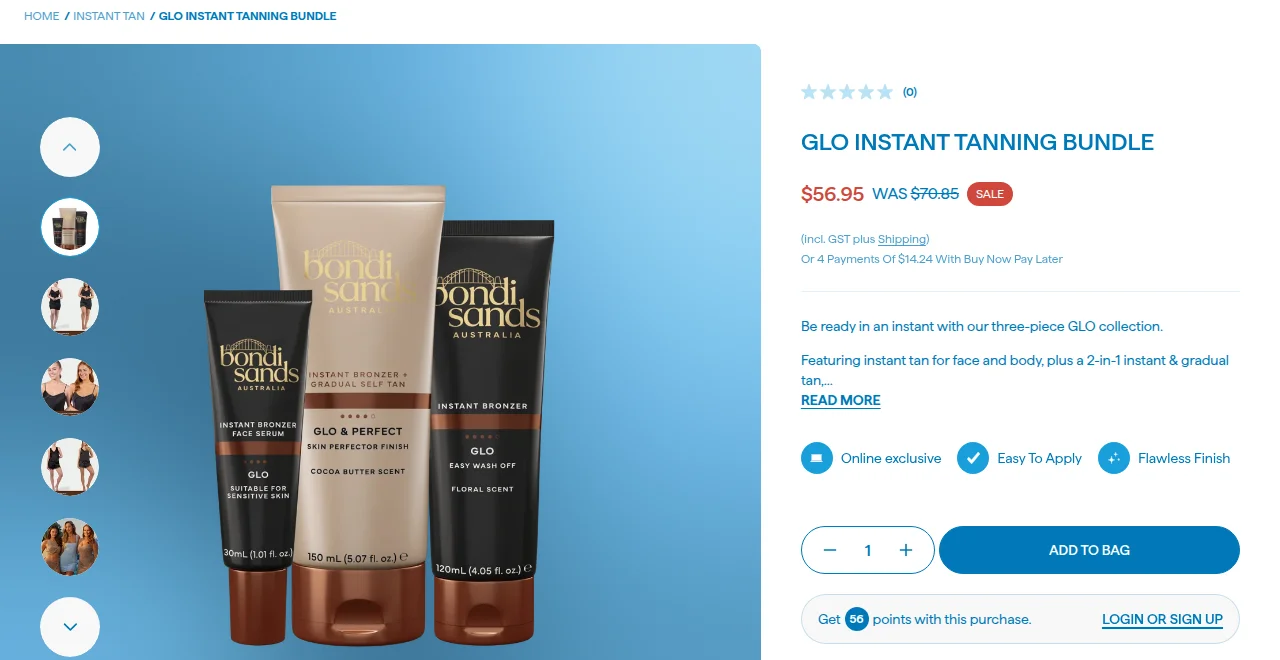
The bundle types Shopify stores actually use
Bundle names vary from app to app, but these are the offers you'll actually set up on a Shopify store, and what each one needs.
| Bundle type | What the shopper sees | Typical fit | How you build it on Shopify |
|---|---|---|---|
| Fixed bundle | A set of different products sold as one listing, like a cleanser, serum and moisturiser "routine" | Products people use together | Shopify Bundles app (free, all plans) |
| Multipack | Two or more of the same product, like a 3-pack of socks | Consumables and basics | Shopify Bundles app |
| Volume discount | "Buy 2, save 10%. Buy 3, save 15%" on the product page or in the cart | Repeat-use products where people stock up | An automatic discount with a minimum quantity, or a bundle app for tiered displays |
| Mix-and-match | A "build your box" page where the shopper picks any 4 flavours or 6 scents | Wide catalogues with lots of variants | A third-party bundle app, or a custom build on Plus |
| Add-on bundle | A main product with a smaller item ticked or suggested next to it, like a tan mitt with the mousse | One hero product with accessories | Complementary products from Shopify's Search & Discovery app, or an upsell app |
| BOGO or gift with purchase | "Buy the mousse, get the mitt free" or a free gift over $100 | Clearing stock or lifting order value | Shopify's Buy X get Y discount |
| Subscription bundle | A box of the same set delivered every 4 or 8 weeks | Coffee, supplements, pet food | A subscription app. Shopify's bundles don't work with subscriptions |
Tiered bundles (good, better, best sets) and seasonal gift sets are fixed bundles with different packaging. Post-purchase offers are add-on bundles shown after payment.
Pure vs mixed bundling, and which one you're running
The economics terms come up a lot, and they're simple. Pure bundling means the products are only sold together. Mixed bundling means each product is also on the site by itself, and the bundle is an extra option, usually at a lower combined price.
Nearly every Shopify bundle is mixed. The Bondi Sands bundle above is three products you can also buy one at a time. That's the normal setup, and it's where the margin risk sits, because some of your bundle buyers would have bought all three at full price anyway.
Pure bundles make sense when the set is the product. Think of a pour-over starter kit where the filter holder only comes in the kit, or a supplement brand's 30-day pack that isn't sold any other way. They avoid the discount problem, but they also take away the cheaper single item that a first-time buyer might have tried.
Pick the bundle type from how people already buy
The best clue is in your own order data. Go to Orders > Export, pull the last 90 days, and look at which products turn up together and how many units people buy.
- Same product, two or more units, again and again. A multipack or volume discount will feel natural. A Gold Coast swimwear brand whose customers buy two pairs of bottoms in different prints has its bundle sitting in the export already.
- The same two or three products in lots of orders. A fixed bundle. If 1 in 5 serum orders already includes the cleanser, the routine bundle has demand. It also has a margin problem, covered below.
- Lots of variants and no clear pairs. Mix-and-match. A candle brand with 14 scents can't guess which three a shopper wants, so it lets them choose.
- One hero product and a support inbox full of "what do I use with this?" questions. An add-on bundle on the product page.
- A slow-moving SKU you need gone before the next drop. A gift with purchase or a bundle with a bestseller. Be honest about why you're doing it, because a bundle built to clear stock will be judged on whether the stock moved, not on revenue per visitor.
Plenty of stores run more than one type, and that's fine. A multipack on the product page and a gift with purchase over a threshold can live together. Run them as separate tests, so you can tell which one changed the numbers.
What Shopify supports natively, and where you need an app
Shopify's own help centre lists three bundle types: Fixed, Multipack and Mix-and-match (Shopify's bundle eligibility page). The free Shopify Bundles app builds the first two on every plan. For mix-and-match, Shopify points you to third-party apps from the App Store, or to its Bundles APIs if you're on Plus.
A few limits catch stores out after launch:
- Bundles don't work with purchase options, which covers subscriptions, pre-orders and try-before-you-buy, and they don't work with the Shopify Subscriptions app.
- Your store needs the upgraded checkout. Stores still using
checkout.liquidcustomisations can't sell bundles. - When you change a component's price, the bundle price stays where it was. You have to update it by hand, which is easy to forget during a sale.
- Bundle stock is set by the component that runs out first. If the bundle needs 2 serums and you have 15, you can sell 7 bundles.
- Bundles don't have their own shipping profiles. Shipping is worked out from the products inside.
- Bundles can't contain other bundles, and they can't be imported, exported or bulk edited.
Volume discounts, BOGO offers and add-ons don't need the Bundles app at all. Volume and BOGO offers are discounts, and add-ons can come from the complementary products you set in the Search & Discovery app, if your theme has a complementary products block.
In Discounts, an automatic Amount off products discount with a Minimum quantity of items requirement covers "buy 2, save 10%" (Shopify's amount off discounts help). Each extra tier is its own discount, so check how they combine. Buy X get Y covers BOGO and free gifts.
Most bundle apps exist to show these offers more clearly on the product page, with tiered pricing boxes and "you save" labels.
The margin maths that decides whether a bundle is worth it
A bundle discount is paid to everyone who takes the bundle, including people who'd have paid full price. So the question is how many new or bigger orders the bundle creates for each order it discounts.
Take a skincare brand in Byron Bay selling a cleanser at $34, a serum at $49 and a moisturiser at $42. That's $125 bought separately. The founder wants a "morning routine" bundle at $106, about 15% off. Product costs are $6, $9 and $8, and the 3PL charges around $12 to pick, pack and post an order.
| Order | Revenue | Product cost | Fulfilment | What's left |
|---|---|---|---|---|
| All three bought separately | $125 | $23 | $12 | $90 |
| The bundle | $106 | $23 | $12 | $71 |
| Serum only | $49 | $9 | $12 | $28 |
Each shopper who would have bought all three anyway now leaves $19 less. Each shopper who would have bought only the serum and takes the bundle instead leaves $43 more. So the bundle needs roughly one upgrade for every two full-price routine buyers it discounts just to break even.
That's why the order export matters. If the routine is already your most common basket, a 15% discount mostly goes to people who were already buying it. A smaller saving, a free travel-size item instead of a price cut, or a bundle built around a product people don't yet pair might make more money. The AOV guide covers the wider set of order value levers, and free shipping thresholds work as a bundle nudge too.
How to test a bundle without fooling yourself
A bundle test changes what people pay, so judge it on revenue per visitor, or profit per visitor if you can track cost. A bundle will often lift average order value while fewer people check out, and AOV alone will call that a win.
Write the hypothesis around one change. For the skincare brand: "Showing the morning routine bundle above Add to cart on the serum page will lift revenue per visitor, because serum buyers keep asking support what to use it with." The variant adds the bundle block. Everything else on the page stays the same. Guardrails are conversion rate, margin per order and refund rate.
Traffic decides how small a lift you can measure. Say the bundle block shows on product pages that get 48,000 visits a month, and those visitors convert at 2.8%. Detecting a move to 3.22% (a 15% relative lift) at 95% significance and 80% power needs about 26,000 visitors per variant, so the test runs around four and a half weeks.
A 10% lift needs about 57,000 per variant, which is more than two months. Revenue per visitor is noisier than conversion rate, so treat these as the minimum. Run your own numbers in the sample size calculator before launch.
Set the rules before the test starts:
Keeping a long list of bundle and offer ideas is a fair way to work. It means the next test is always ready. Its one weakness is that it doesn't build on what you learn.
If the routine bundle wins on the serum page and does nothing on the cleanser page, that says something about who buys the serum, and the next test should probably follow that before the next idea on the list. The Shopify price testing guide goes deeper on testing discounts and price points.
DIY testing apps like Intelligems and Shoplift make bundle and offer tests possible for a lot more stores. The hours are still yours, though: reading the order data, writing the hypothesis, designing the bundle block, building it, QA on phones and reading the result. Retainer agencies take that work on and bill the same each month whether the bundle makes money or not.
Cascayd is outcome-based and hands-off. Our team does the research, strategy and creative design, and AI speeds up the build and the grunt work. Each test comes to you in Slack with the reasoning, you approve it or ask for changes, and Cascayd is paid only from a share of measured uplift. It suits stores with roughly 40,000 or more product page visitors a month, where tests like this finish in weeks. See how the Shopify CRO service works.
Your next step
Export the last 90 days of orders today and count three things: orders with two or more units of one product, orders that already contain your likely bundle, and orders with only the hero product. Those three numbers tell you which bundle type to build and how big the discount can be. If you'd rather have the research, build and testing done for you, book a call and tell us about your store.